Reading distance · live, in your browser
You're sitting too close.
Probably. Let's actually measure it.
Most adults read at 35–45 cm. That's inside the close-focus zone the eye adapts to over years — and it adapts the wrong way. Healthy is 50–60 cm. Camera + a wallet-size card and you'll know which side of the line you're on, live.
We'll watch your eyes through your camera. Nothing leaves this browser — no frames are uploaded or saved.
Why this matters
The eye is not passive. Hours per day at 35–45 cm tell the visual system "close-up is the new normal" — and the ciliary muscle, the lens, and (over years) the eyeball itself adapt. The adaptation is what your optometrist calls "your eyes got worse." The input that drives it is reading distance. Fix the input, the adaptation stops.
50 cm is the absolute minimum before the wrong stimulus kicks in. 60 cm is comfortable. Most laptops set you up to fail by default — the natural arm-rest position lands eye-to-screen at about 40 cm.
How this measures it
One-time calibration learns your personal interpupillary distance (the millimeters between your pupils) using a wallet-size card as a known-size reference. After that, the camera tracks your iris pixel positions in real time; your iris-to-iris pixel width shrinks the farther back you sit. Combine the two and you get distance in centimeters.
All of this runs in your browser. No frames are uploaded. Calibration is shared with our other camera tools — calibrate once, all of them work.
Distance is one input. There are five.
The full method is a structured 90-day program — proper lenses, measured progress, the things only experience can tune.
Reading distance is one of the foundational fixes. Active focus is another. The whole thing — diagnosis, lens recommendations, daily habits, weekly check-ins — lives inside BackTo20/20. Full Program $997 one payment · or $99/mo × 12 · lifetime access · money-back guarantee.
Or keep exploring with the free Eyeball Analyzer (20 minutes, your numbers, what they mean).
Limitations & disclaimer
EndMyopia treats myopia as a refractive state, not a medical condition. This is a free educational tool — not medical advice, diagnosis, or a substitute for a licensed optometrist. Measurements depend on camera quality and how carefully you mark the card edges; expect ±5–10 % on laptops, ±10–15 % on phones. For lens orders, eye health concerns, or any task requiring full 20/20 vision, see a licensed professional.
Your glasses are a subscription
Designed to keep your eyes blurry.
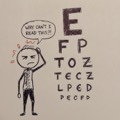

Simple therapy can get your real eyes back. — Jake Steiner, vision biologist turned eye guru
Get your real eyes back →