Free explainer · runs in your browser
What does your eyesight number mean?
20/50, 20/70, −3.25 — in plain language.
Two different numbers describe nearsighted eyes: the 20/xx result from the on the wall, and the minus number on your glasses paperwork, measured in . Enter either one and read what it actually means — what's sharp at what distance, where you sit on the spectrum, and what “legally blind” does and doesn't mean.
Pick the line you were given:
Pick a line above first.
How to read the chart number (20/40, 20/70 …)
The first number is the testing distance — in the US, 20 feet. The second is the distance from which a typical eye could read the same row. So 20/70 means a sign a typical eye reads from 70 feet has to come all the way in to 20 feet before it resolves for you. The fraction says nothing about close-up vision: a nearsighted 20/100 eye still reads a phone perfectly.
Countries on meters write the same idea as 6/6, 6/12, 6/21 — the ratios match (6/12 is 20/40).
How to read the glasses number (−1.00, −3.25 …)
The minus number on your glasses paperwork is measured in — the strength of the lens that brings the distance back. It doubles as a ruler: divide 1 meter by the number and you get where your bare-eyed sharpness ends. That's why the steps matter — lenses come in 0.25 jumps (−1.00, −1.25, −1.50 …), the smallest change most eyes reliably notice.
Mild, moderate, high — where the bands sit
Mild (−0.25 to −3.00). Distance softens; the close world is untouched. At −1.00 the world is sharp to about a meter, at −2.00 to about half. People at the low end often go without glasses indoors and reach for them to drive, watch a far screen, or read a lecture board.
Moderate (−3.25 to −6.00). The sharp zone ends inside arm's reach — about 30 cm at the top of the band, about 17 cm at the bottom. Glasses go on with the morning alarm, because bare-eyed, faces across a table soften and a TV across the room is shapes and color.
High (−6.25 and beyond). Bare-eyed sharpness ends nearer than 16 cm — closer than most people hold a phone. Lens design starts to matter here: stronger lenses run thicker at the edges and shrink the image slightly. With lenses on, most people in this band still see sharply.
“Legally blind” — what the words actually require
Without glasses: 20/200
Not what the law measures. Bare-eyed 20/200 is plain nearsightedness — around −2.50 to −3.00 — and lenses bring it back.
With best lenses: still 20/200
This is the actual threshold. Vision that stays at 20/200 in the better eye even when corrected is what the term refers to.
The US definition: with the best lenses available, the better eye still reads 20/200 or worse — or the field of view is 20 degrees or less. It's an administrative threshold used for benefits and services, not a description of how blurry the world is with glasses off. Ordinary nearsightedness — −2.00, −5.50, even −10.00 — corrects to sharp or near-sharp vision, so it doesn't come close, whatever the bare-eyed blur feels like.
Chart result ↔ glasses number, side by side
Approximate — the chart measures what you can make out; the glasses number measures the lens that brings the rest back. The same chart line can come from different glasses numbers, so every row is a ballpark, not a conversion.
| Bare-eyed chart | Glasses number | What that's like |
|---|---|---|
| 20/20 | 0.00 to −0.25 | typical sharpness |
| 20/30 | ≈ −0.50 | distant signs resolve a little late |
| 20/40 | ≈ −0.75 | the usual unrestricted-driving line |
| 20/50 | ≈ −1.00 to −1.25 | back-of-room text is work |
| 20/70 | ≈ −1.25 to −1.75 | distant faces go generic |
| 20/100 | ≈ −1.75 to −2.25 | top chart rows only |
| 20/200 | ≈ −2.50 to −3.00 | the big E — and not legally blind |
| 20/400 | ≈ −4.00 | the big E from half distance |
Common questions
Is 20/50 vision bad?
20/50 means you read at 20 feet what a typical eye reads from 50 feet. On the overall spectrum it's mild — roughly a −1.00 to −1.25 glasses number — but it sits below the 20/40 line most US states want for unrestricted driving, so it's usually the point where glasses stop being optional on the road. With glasses, almost everyone at 20/50 sees a full 20/20.
What does 20/70 vision mean?
At 20 feet you make out what a typical eye makes out from 70 feet. Distant faces read as shapes rather than features, and signs have to be fairly close before they resolve. Some "low vision" definitions start at 20/70 — but only when that's the best result glasses can produce. If lenses bring you to 20/20, that label does not apply to you.
Is −3 eyesight bad?
−3.00 diopters sits at the top of the mild band — moderate starts at −3.25. Without glasses, everything past about 33 cm (a little beyond where you'd hold a book) softens, and on a wall chart you'd land near the bottom rows. With glasses, vision is typically a full 20/20. It's also extremely common: a large share of all glasses wearers fall between −1.00 and −3.00.
Is −5.5 eyesight legally blind?
No. Legal blindness (the US definition) is judged with your best glasses on: 20/200 or worse in the better eye with the strongest suitable lenses, or a field of view of 20 degrees or less. A −5.50 glasses number that corrects to sharp vision — which it almost always does — is nowhere near legally blind, no matter how blurry the world looks with the glasses off.
Is 20/200 vision legally blind?
Only if 20/200 is the best you can see with the strongest suitable lenses on. Testing 20/200 bare-eyed is just ordinary nearsightedness — roughly a −2.50 to −3.00 glasses number — and it usually corrects to 20/20. The "legally blind" threshold is about corrected vision, which is the part of the definition most people miss.
What is a normal eyesight number?
On the wall chart, 20/20 is the agreed-on typical line — not perfection; plenty of young eyes manage 20/15. On glasses paperwork, no nearsightedness at all reads 0.00, and anything from −0.25 onward means distance starts to soften somewhere short of the horizon.
What to do with your number
The full method is a structured 90-day program — proper lenses, measured progress, the things only experience can tune.
EndMyopia members work on lowering their glasses numbers step by step. The whole thing — your numbers explained, lens recommendations, daily habits, weekly check-ins — lives inside BackTo20/20. Full Program $997 one payment · or $99/mo × 12 · lifetime access · money-back guarantee.
Full program USD 997 · or $99/mo × 12 · money-back guarantee
Or keep exploring with the free Eyeball Analyzer (20 minutes, your numbers, what they mean).
Common numbers, explained
Plain-English explainers for specific chart results and glasses numbers:
Don't know your line?
The free online eye test draws a real letter chart at the right physical size for your screen and your distance, one row at a time, and reports the 20/xx line each eye reaches.
Limitations & disclaimer
EndMyopia treats myopia as a refractive state, not a medical condition. This is a free educational tool — not medical advice, diagnosis, or a substitute for a licensed optometrist. Measurements depend on camera quality and how carefully you mark the card edges; expect ±5–10 % on laptops, ±10–15 % on phones. For lens orders, eye health concerns, or any task requiring full 20/20 vision, see a licensed professional.
Your glasses are a subscription
Designed to keep your eyes blurry.
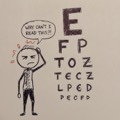
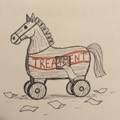
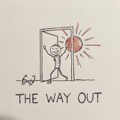
Simple therapy can get your real eyes back. — Jake Steiner, vision biologist turned eye guru
Get your real eyes back →