Convert Contacts to Glasses (and Back).
We are endmyopia. We don't sell glasses.
Happy eyes = getting the RIGHT numbers.
Convert my number · 10 sec
4.9 Trustpilot · 33,000 Facebook group · 70,000 YouTube · No affiliate links
Your contact lens box
Too Much Lens Power Can Make Your Eyes Worse.
Dial in the right power for happy eyes.
Or a quick guess: contacts and glasses off, where does text go blurry?
Sent. Check your inbox, then carry on to step 2.
*No spam. Just better eyes.
Go deeper
Why do the two numbers differ?
Glasses sit about 12 mm in front of your eye, contacts sit on it. A minus lens works harder the closer it sits, so contacts need a bit less. Under about −4.00 the gap is smaller than one 0.25 step and both read the same.
What about astigmatism (CYL)?
Under about −3.00 it usually stays as printed. Above that it converts the same way, and the axis stays as written.
Can I order contacts with this number?
A contacts order also needs a base curve (BC) and a diameter (DIA). Those come from the box you have, or from a fitting.
Slide or type your number to see it converted.
What do you want from your eyes?
Fine for today. Most people need stronger next year.
Your eyes aren't broken.
Your road, from −4.00.
Many of my clients though get about 20% diopter reduction in the first 90 days, and about 0.75 diopters per year thereafter.
Initial results vary widely. It depends on your myopia degree, lens use, age, and many more factors.
Go deeper
Why does the number go up every year?
Each new pair is set for the far wall, and you spend the day close up. That gap is the strain the next exam measures.
Glasses (and strain) are the real problem.
Glasses are an instant fix. Put them on, everything is clear. Ignoring what caused bad vision entirely. For a price. At checkout and long term. Retail optometry loves the lifetime subscriber model.
Why one step under full strength?
Full strength makes everything as sharp as it gets, so your eyes never have to reach. One 0.25 step less leaves a sliver of far distance just past sharp. That small reach is what people here build on, week by week.
How do people go down instead of up?
Less lens, step by step, as the eyes catch up. Many members get about 20% less lens in the first 90 days.
See real people who did it
Gina −6.50 to −3.75, Matt −5.00 to no glasses, Audrey −2.75 to no glasses. From the Shortsighted Podcast.
Full rabbit hole:
Why glasses actually make your eyes worse Glasses are a subscription business. But you can get out.Sent. Check your inbox, then take your numbers to your glasses shop.
*No spam. Just better eyes.
From Jake Steiner, 20 years of endmyopia. Unsubscribe in one click.
*Not medical advice, no cures.
Figure Out Your (Happy) Eyes: No Glasses Shop Does This For You
Selling glasses is totally unrelated to taking care of your eyes. They sell symptom treatment. You might want more.
Real members, numbers as each person gave them on the Shortsighted Podcast.
Don't just get stronger glasses every time. Get better eyesight.
 How I Improved My Eyesight Naturally
709,737 views on YouTube
2 minutes. Plays right here.
Start here
Where are your eyes today?
Glasses off. Hold your phone where the words are still just sharp. How far away is it?
That is roughly −3.25. You just measured your own eyes.
No number needed. Everything below works without one.
Example: someone starting at −4.00. Set your own above.
Your desk, glasses off · 3 years in
A picture of the idea, not a measurement.
−4.00 → −1.25
sharp to 25 cm → 80 cm, glasses off
Many of my clients though get about 20% diopter reduction in the first 90 days, and about 0.75 diopters per year thereafter.
Initial results vary widely. It depends on your myopia degree, lens use, age, and many more factors.
*Not medical advice, no cures.
When contacts and glasses round to different numbers
The bending is the same on both planes; the distance from the cornea changes how much bending is needed. Below −3.50 D the math rounds the contact and the glasses to the same 0.25 D step — no difference printed. Above it, the gap survives the rounding.
Formula: Fcontact = Fglass ÷ (1 − d × Fglass), where d is vertex distance in meters. Cylinder usually carries across unchanged unless you're above ~−3.00 cyl.
Contact lens to glasses conversion chart (vertex 12 mm)
Under about ±4.00 the two numbers are the same to the nearest 0.25; the chart matters from there up.
| Glasses | Contacts |
|---|---|
| −1.00 | −1.00 |
| −1.25 | −1.25 |
| −1.50 | −1.50 |
| −1.75 | −1.75 |
| −2.00 | −2.00 |
| −2.25 | −2.25 |
| −2.50 | −2.50 |
| −2.75 | −2.75 |
| −3.00 | −3.00 |
| −3.25 | −3.25 |
| −3.50 | −3.25 |
| −3.75 | −3.50 |
| −4.00 | −3.75 |
| −4.25 | −4.00 |
| −4.50 | −4.25 |
| −4.75 | −4.50 |
| −5.00 | −4.75 |
| −5.25 | −5.00 |
| −5.50 | −5.25 |
| −5.75 | −5.50 |
| −6.00 | −5.50 |
| −6.25 | −5.75 |
| −6.50 | −6.00 |
| −6.75 | −6.25 |
| −7.00 | −6.50 |
| −7.25 | −6.75 |
| −7.50 | −7.00 |
| −7.75 | −7.00 |
| −8.00 | −7.25 |
| −8.25 | −7.50 |
| −8.50 | −7.75 |
| −8.75 | −8.00 |
| −9.00 | −8.00 |
| −9.25 | −8.25 |
| −9.50 | −8.50 |
| −9.75 | −8.75 |
| −10.00 | −9.00 |
| −10.25 | −9.25 |
| −10.50 | −9.25 |
| −10.75 | −9.50 |
| −11.00 | −9.75 |
| −11.25 | −10.00 |
| −11.50 | −10.00 |
| −11.75 | −10.25 |
| −12.00 | −10.50 |
| Glasses | Contacts |
|---|---|
| +1.00 | +1.00 |
| +1.25 | +1.25 |
| +1.50 | +1.50 |
| +1.75 | +1.75 |
| +2.00 | +2.00 |
| +2.25 | +2.25 |
| +2.50 | +2.50 |
| +2.75 | +2.75 |
| +3.00 | +3.00 |
| +3.25 | +3.50 |
| +3.50 | +3.75 |
| +3.75 | +4.00 |
| +4.00 | +4.25 |
| +4.25 | +4.50 |
| +4.50 | +4.75 |
| +4.75 | +5.00 |
| +5.00 | +5.25 |
| +5.25 | +5.50 |
| +5.50 | +6.00 |
| +5.75 | +6.25 |
| +6.00 | +6.50 |
| +6.25 | +6.75 |
| +6.50 | +7.00 |
| +6.75 | +7.25 |
| +7.00 | +7.75 |
| +7.25 | +8.00 |
| +7.50 | +8.25 |
| +7.75 | +8.50 |
| +8.00 | +8.75 |
Contacts also need a base curve and diameter that a glasses paper doesn't carry; the shop's fitting gives those.
Frequently asked
Is a contact lens number the same as glasses?
No. Glasses sit about 12 mm in front of the eye and contacts sit on it, so the same eye needs a slightly different power on each plane. Below about ±4.00 the two round to the same 0.25 step. A contact order also carries a base curve and a diameter that a glasses paper does not list.
How do you convert a glasses number to contacts?
Divide the glasses power by one minus the vertex distance in meters times that power: F_contact = F_glass ÷ (1 − 0.012 × F_glass). Round the result to the nearest 0.25. The calculator above runs it in both directions, and the chart lists every step from −1.00 to −12.00.
What is vertex distance?
Vertex distance is the gap between the back of a lens and the front of the eye, about 12 mm for a typical pair of glasses. A contact lens sits on the cornea, so its vertex distance is zero. That gap changes how much power actually reaches the eye, which is why the two numbers separate as they grow.
Why is my contact lens power lower than my glasses?
For a nearsighted eye the contact number is the weaker of the two. Moving a minus lens closer to the eye makes it more effective, so less power is needed. A −6.00 glasses power converts to about −5.50 in contacts, while a −2.00 stays −2.00 once it is rounded to the nearest 0.25.
Can I use the glasses number to order contacts?
Not as it stands. The power needs converting above about ±4.00, and a contact order also carries a base curve and a diameter that no glasses paper lists. Those two come from a fitting at the shop. The converted number tells you what to expect, not what to type into the order.
Does astigmatism convert the same way?
Cylinder uses the same formula, but it is usually left as printed below about −3.00 because the shift is smaller than the 0.25 rounding step. Above that, sphere and cylinder are converted separately and the axis stays as written. Toric contacts come in their own set of available steps.
Ordering the glasses rather than the contacts? A lens shop also wants the gap between your pupils — the pupillary distance tool measures it with the camera. Not sure which number is which on the paper? Our glasses paper reader reads every line of it first.
More free tools
At endmyopia we treat myopia as a refractive state, not a medical condition. This is a free educational tool — not medical advice, diagnosis, or a substitute for a licensed optometrist. Measurements depend on camera quality and how carefully you mark the card edges; expect ±5–10 % on laptops, ±10–15 % on phones. For lens orders, eye health concerns, or any task requiring full 20/20 vision, see a licensed professional.
Next tools
 APP-006Centimeter Ledger
 APP-007Measure Astigmatism
 APP-008Eyeball Analyzer (sphere)
 APP-010What Your Eyesight Number Means
 APP-011Read your prescription
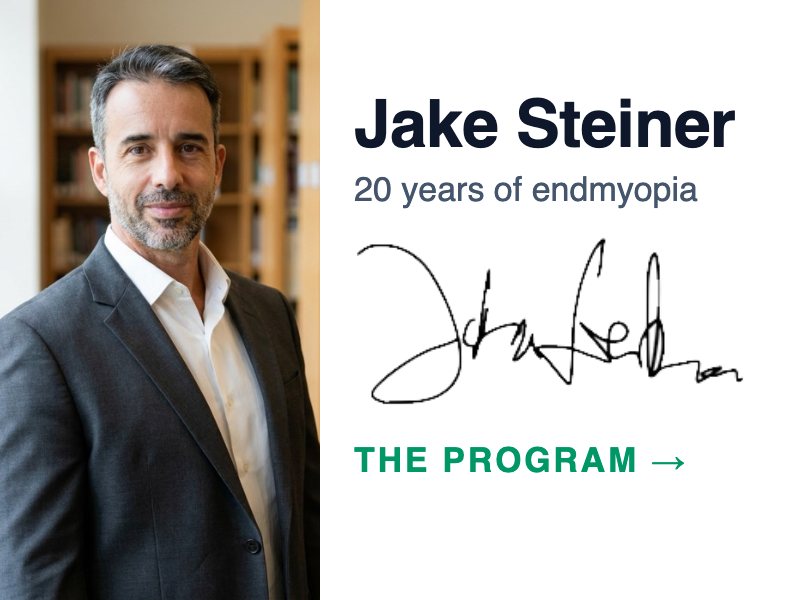 endmyopiaThe program →
Keep reading


Your glasses are a subscription
Designed to keep your eyes blurry.
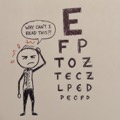

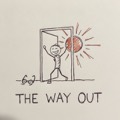
Simple habits can get your real eyes back. — Jake Steiner, founder and research director of endmyopia
Get your real eyes back →